
If your brain tends to run a full marathon exactly when it’s time to sleep, welcome — you’re not alone. Many of us experience what I like to call “Nighttime Overthinking Olympics,” where your mind suddenly remembers everything from your to-do list to that embarrassing moment from 2014.
A calming night routine can gently shut down this mental chaos and help your mind shift into rest mode. And yes — science agrees: according to the National Sleep Foundation, nighttime habits strongly influence the quality of your rest, your emotional balance, and even your daily productivity.
Here are the best, science-backed steps to create a stress-free mind before bed.
1. Dim the Lights 1–2 Hours Before Bed
Bright lights tell your brain: “It’s party time!”
Dim lights tell your brain: “It’s bedtime… finally.”
Research from Harvard Medical School shows that lowering light exposure signals your body to produce melatonin — the hormone that helps you fall asleep more easily.
Try switching to:
- warm, soft lights
- salt lamps
- candle-like LEDs
- or your phone’s “bedtime mode” (but not actual phone scrolling… we’ll get to that 😅)
2. Sip a Calming Herbal Drink (No, Coffee Not Included)

Herbal teas like chamomile, lemon balm, lavender, or rooibos have mild relaxing effects. A classic study published in Phytomedicine suggests chamomile may reduce anxiety symptoms.
Plus, there’s something psychologically soothing about a warm drink — as if your body says, “Ah yes, we’re entering cozy mode.”
No caffeine. No energy drinks. No “just one espresso.” (We’re watching you.)
3. Do a “Brain Download” – Write Everything Down

Overthinking often comes from carrying too many open mental tabs.
A quick journaling session helps unload them.
Write down:
- tasks for tomorrow
- random ideas
- worries
- reminders
According to the book “Getting Things Done” by David Allen, your brain relaxes when it knows information is stored somewhere trustworthy — not floating in your head at 11:47 PM.
4. The 30-Minute Digital Detox
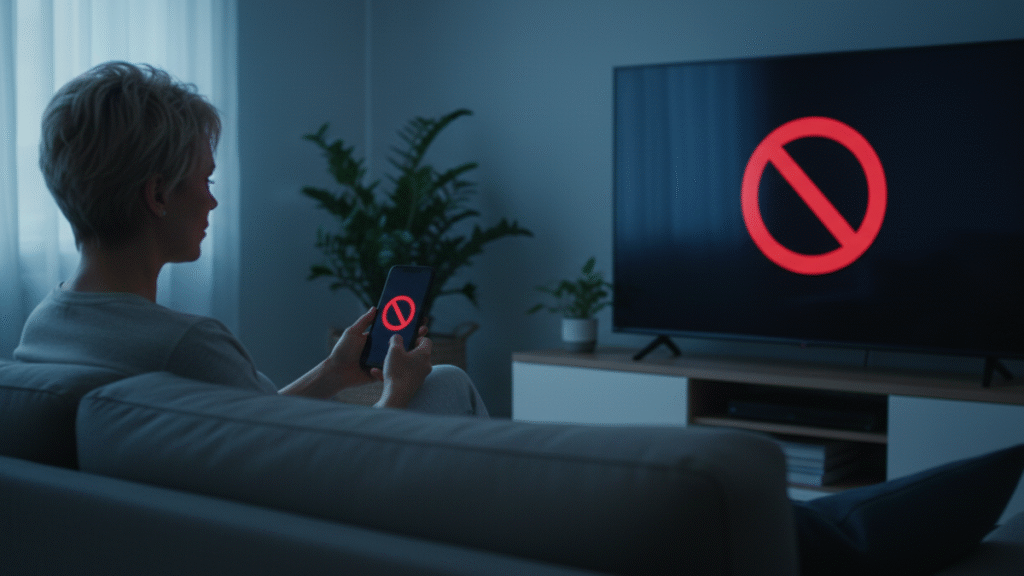
Your phone is basically a pocket-sized stress machine at night.
Notifications, blue light, endless scrolling… it’s a circus.
Studies from the Journal of Behavioral Addictions link nighttime screen use with sleep disruption and higher stress.
So try:
- turning on airplane mode
- leaving your phone across the room
- reading a physical book
- or listening to soft music
Your brain will thank you.
5. Practice 3 Minutes of Relaxing Breathing
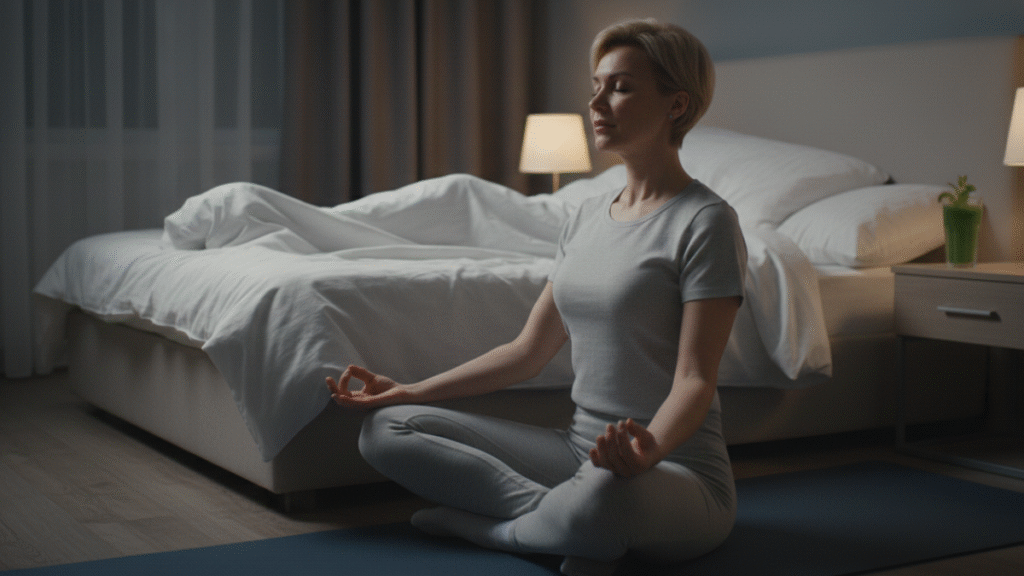
A super simple breathing technique recommended by many therapists is the 4–7–8 method:
- Inhale for 4 seconds
- Hold for 7 seconds
- Exhale slowly for 8 seconds
Dr. Andrew Weil (author of “Spontaneous Happiness”) often cites this technique for reducing anxiety and calming the nervous system.
Bonus: your mind feels quieter almost instantly.
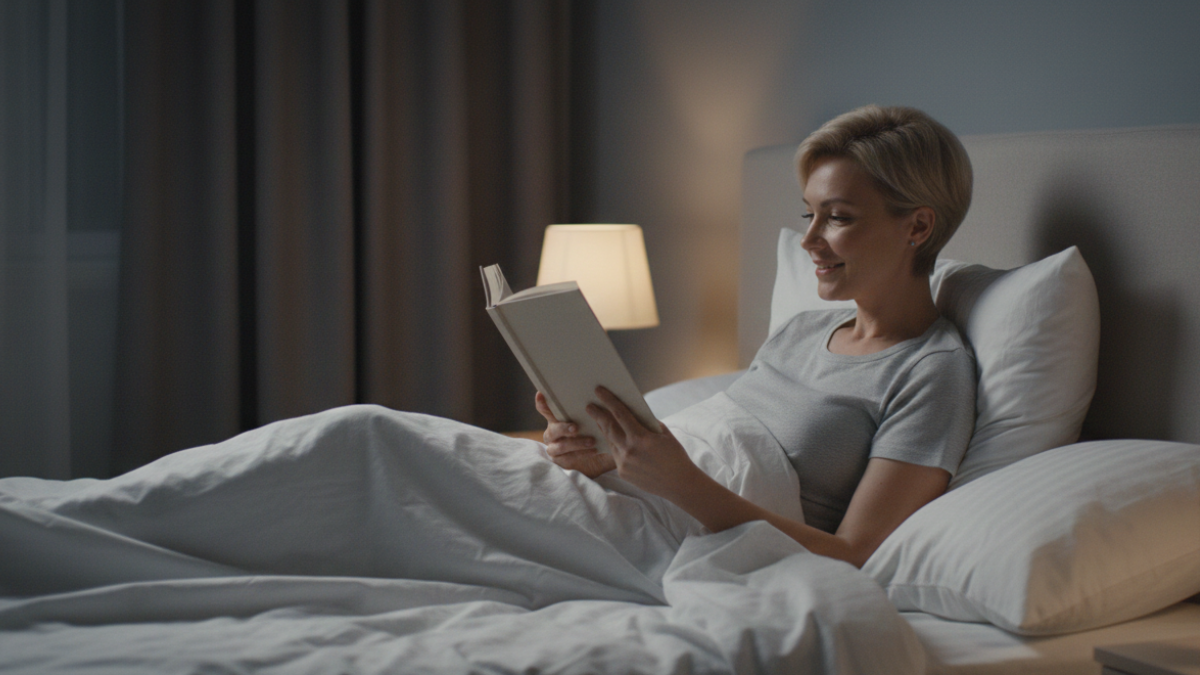
6. Read Something Pleasant, Light, or Inspiring
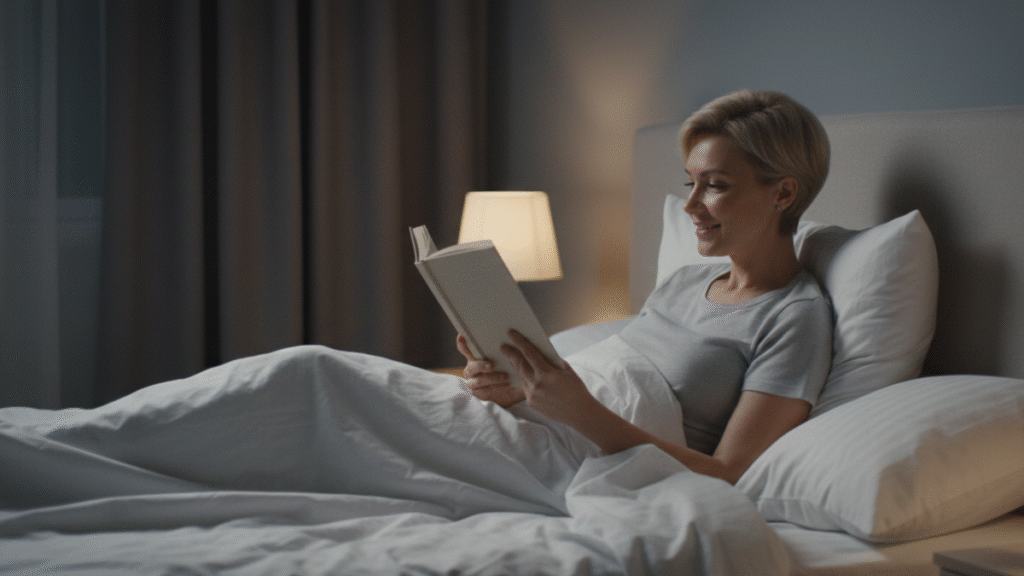
Not the news.
Not financial reports.
Not dystopian novels unless you want nightmares.
Pick something calm — inspirational, educational, or cozy.
Science agrees: reading reduces stress levels by up to 68%, according to a study by the University of Sussex.
Great options:
- a wellness blog
- inspirational books
- light fiction
- personal development classics
(And yes, Vital Vibes totally counts as “light and educational reading.” 😉)
7. Build a Consistent Sleep Ritual
Your brain loves consistency — it’s like a puppy that learns routines surprisingly fast.
Choose a sequence like:
- drink tea
- dim lights
- journal
- brush teeth
- breathe
- read 5 minutes
- sleep
Repeating the same steps daily makes your brain associate them with calmness.
In his book “Why We Sleep,” Matthew Walker explains that consistent pre-sleep rituals help synchronize the circadian rhythm and reduce nighttime stress.
Final Thoughts
A stress-free night isn’t created by one big action — it’s built through small, gentle habits that calm your body and mind.
Start with one or two of these habits and slowly build your perfect night routine.
Your mind will feel lighter.
Your stress levels will drop.
And your sleep? Much, much better.
Little steps. Gentle nights. A calmer you.
FAQ
A good night routine includes dimming the lights, avoiding screens, journaling, drinking a calming herbal tea, practicing breathing exercises, and creating a consistent pre-sleep ritual.
Most sleep specialists recommend starting your wind-down routine 1 to 2 hours before bedtime to allow your body to naturally transition into rest mode.
Yes. Writing down your thoughts and tasks helps remove mental clutter, reducing nighttime overthinking and anxiety.
Chamomile, lavender tea, lemon balm, rooibos, or any caffeine-free herbal infusions are excellent for calming the nervous system.
Lower light levels help your brain produce melatonin, a natural sleep hormone essential for falling asleep faster.
Absolutely. Studies show reading reduces stress by up to 68%, helping your mind relax and shift away from anxious thoughts.
Try breathing exercises like the 4–7–8 method, journaling for 5 minutes, avoiding screens, and creating a consistent, calming ritual.